Archives
- 2026-10
- 2026-09
- 2026-08
- 2026-07
- 2026-06
- 2026-05
- 2026-04
- 2026-03
- 2026-02
- 2026-01
- 2025-12
- 2025-11
- 2025-10
- 2025-09
- 2025-04
- 2025-03
- 2025-02
- 2025-01
- 2024-12
- 2024-11
- 2024-10
- 2024-09
- 2024-08
- 2024-07
- 2024-06
- 2024-05
- 2024-04
- 2024-03
- 2024-02
- 2024-01
- 2023-12
- 2023-11
- 2023-10
- 2023-09
- 2023-08
- 2023-07
- 2023-06
- 2023-05
- 2023-04
- 2023-03
- 2023-02
- 2023-01
- 2022-12
- 2022-11
- 2022-10
- 2022-09
- 2022-08
- 2022-07
- 2022-06
- 2022-05
- 2022-04
- 2022-03
- 2022-02
- 2022-01
It has been reported that Daxx an interacting partner of
2024-08-01
It has been reported that Daxx, an interacting partner of MCRS2/MSP58, promotes ASK1 activation following direct interaction with ASK1 [10], [11]. However, it has not been determined whether MCRS2 is involved in ASK1 signalling. In this study, we identified the direct interaction between MCRS2 and A
The approach of enzymatically converting an analyte
2024-08-01

The approach of enzymatically converting an analyte and detecting it by the resulting small pH changes near the reduced graphene oxide (rGO) surface has successfully been pursued in case of urea (Piccinini et al., 2017). Furthermore, this work reported that electrostatic layer-by-layer (LbL) assembl
Introduction Heterotrimeric G proteins mediate signal transd
2024-08-01
Introduction Heterotrimeric Gαβγ proteins mediate signal transduction through seven-transmembrane domain receptors. In response to neurotransmitters or hormones, activated receptors bind GTP via the Gα subunit leading to the dissociation of Gα from the Gβγ dimer. G proteins regulate the levels of s
br Conclusions br Funding This work was supported by a
2024-08-01
Conclusions Funding This work was supported by a Finnish government subsidy for health science research [grant numbers TYH2012141, TYH 2013218, and TYH 2014216]; the SSAC Foundation [grant numbers SLS-504141 and SLS-693781]; and the Paulo Foundation. The funding sources had no involvement in s
Although little is known about the etiopathogenesis of preec
2024-08-01

Although little is known about the etiopathogenesis of preeclampsia, this syndrome has a major impact on maternal and fetal health worldwide, since it is responsible for 10–15% of maternal deaths [16], [17], preterm births, intrauterine growth restriction (IUGR), and fetal deaths [2]. In developing
First the complete canonical brain original RAS
2024-08-01
First, the complete canonical brain original RAS (Angiotensinogen, Renin, Angiotensin I, Angiotensin Converting Enzyme (ACE), Angiotensin II) has not been conclusively identified in any specific cell type within the brain [1]. Validated evidence for the presence of brain Angiotensinogen and ACE was
br Conflict of interest br
2024-08-01
Conflict of interest Introduction The Piezo proteins, Piezo1/FAM38A and Piezo2/FAM38B, are multi-pass transmembrane proteins that have been identified as mechanically-activated (MA) homomultimeric, pore-forming ion channels [1,2]. Piezo1 is broadly expressed with its highest expression in blad
br Translational Considerations Targeting the AHR Pathway
2024-08-01
Translational Considerations Targeting the AHR Pathway Modulating AHR function offers exciting therapeutic potential in host immunity and inflammation. However, the emerging concept of AHR function in a cell type-specific manner, combined with differences between AHR activation in cell culture in
Our previous work fails to show any maternal
2024-08-01

Our previous work fails to show any maternal effect with blockade of 5-HT2A receptor, as acute and repeated treatment of MDL100907 does not alter maternal behavior at the behaviorally active doses (Chen et al., 2014). In the present study, MDL100907 pretreatment attenuated the maternal disruptive ef
In earlier experiments on snails
2024-08-01
In earlier experiments on snails, a behavioral model was employed of certain food rejection to study the mechanisms of the reconsolidation of long-term associative memory. It was found that conditioned food stimuli (reminder) presentation, combined with injections of NMDA glutamate receptor antagoni
Several reports of single cases of MG patients treated
2024-08-01
Several reports of single cases of MG patients treated with Rituximab have claimed a favourable response (Baek et al., 2007, Gajra et al., 2004, Hain et al., 2006, Thakre et al., 2007, Wylam et al., 2003, Zaja et al., 2000). We report our experience with Rituximab in 6 patients with severe MG, 3 pa
Another open question is whether GABA
2024-08-01

Another open question is whether GABA and ACh are released from the same synaptic vesicles, or even the same presynaptic terminals. Multi-transmitter neurons may either function through co-release, in which multiple neurotransmitters are packaged into the same presynaptic terminal and are therefore
Bromoenol lactone The SKOV and SKOV TR cells
2024-07-31
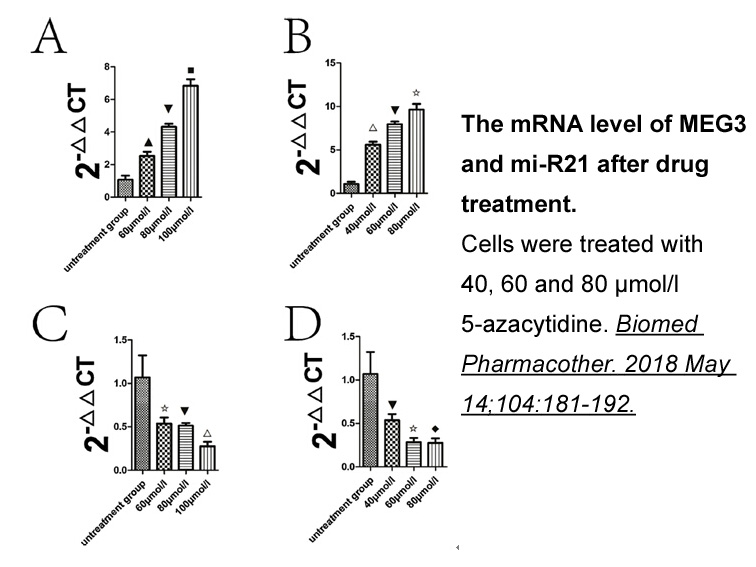
The SKOV3 and SKOV3TR Bromoenol lactone were exposed to stepwise increased concentration of paclitaxel with or without a different concentration of autophagy inhibitor (3-MA or HCQ) to further evaluate whether suppression of autophagy affected the growth and drug sensitivity of ovarian cancer cells
Pompe disease is accompanied by the deficiency of the
2024-07-31
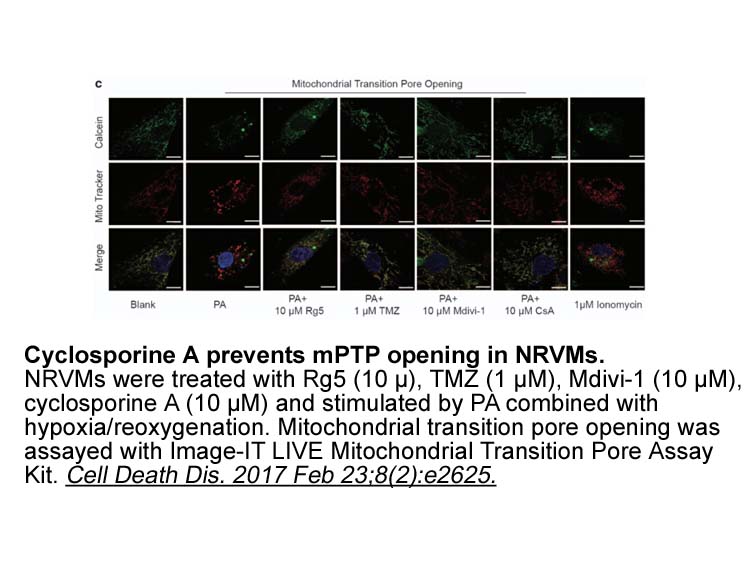
Pompe disease is accompanied by the deficiency of the lysosomal α-1,4-glucosidase that makes the nourseothricin synthesis unable to hydrolyze glycogen to glucose, thereby resulting in the accumulation of glycogen in lysosomes, especially in skeletal muscles and cardiac tissues. This accumulation re
Song et al reported series of triazolylsalicylamide
2024-07-31
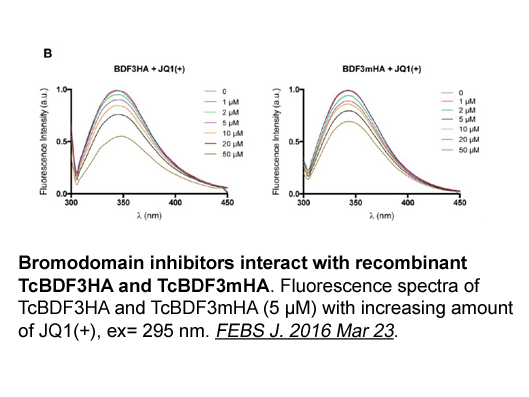
Song et al. reported series of 1,2,3-triazolylsalicylamide derivatives and screened over kinase panel and found compound 31 as most potent which inhibited Aurora-A, specifically with IC50 of 0.37 μM. Compound 31 was about 10-fold more active for Aurora-A than for Aurora-B (IC50 = 3.58 μM reported se
8582 records 144/573 page Previous Next First page 上5页 141142143144145 下5页 Last page